

How to Measure Earring Size: A Complete Guide
Choosing earrings you love is easy. Choosing earrings that feel comfortable and look right once you put them on is where sizing matters. If you have ever ordered earrings online and been surprised by how small or large they looked in person, you are not alone.


Published March 31, 2026

Knowing how to measure earring size helps you avoid that guesswork and choose pieces that fit your ears, your style, and your everyday life.
Whether you prefer subtle studs, classic hoops, or statement drops, understanding size makes shopping simpler and more confident.
The Basics of Earring Size and Fit
Before measuring anything, it helps to understand what “earring size” means. Unlike rings or bracelets, earrings are not sized with a single number. Different styles use different measurements, and knowing which one applies is key.
What Earring Size Refers To
Earring size can describe several things, depending on the design:
- Diameter, usually for hoops and huggies
- Length, for drop and dangle earrings
- Width, for studs or statement pieces
- Gauge, which refers to the thickness of the post or wire
Most product descriptions include one or more of these measurements. Knowing how to read them helps you picture how the earrings will look once worn.
Why Getting Size Right Matters
Size affects more than appearance. Earrings that are too large or heavy can feel uncomfortable over time, while very small designs may not give you the look you expect. The right size creates balance with your face, feels comfortable throughout the day, and suits how and where you plan to wear your earrings.
How to Measure Earring Size at Home
You do not need special tools to measure earring size accurately. A ruler marked in millimeters, a piece of string or paper, and a pen are usually enough.
What You Need
- A ruler, preferably with millimeter markings
- A piece of paper, string, or dental floss
- A pen or pencil
Millimeters are the most common unit used in jewelry sizing, so measuring in millimeters helps avoid confusion when comparing products.
How to Measure Stud Earrings
Stud earrings are measured by their visible size on the ear.
To measure a stud, measure straight across the widest point of the front of the earring. This gives you the diameter or width, usually listed in millimeters. Common stud sizes range from about 3 mm for very subtle studs to 8 mm or larger for statement styles.
For extra accuracy, you can also verify the post length. This is especially helpful if you have thicker earlobes or prefer a secure backing. Post length is measured from the base of the stud to the end of the post.
How to Measure Hoop Earring Diameter
Hoop size is one of the most common areas of confusion. The key measurement is the inner diameter, not the outer edge.
To measure hoop earrings, place the hoop on a flat surface and measure straight across the inside of the circle at its widest point. This inner diameter determines how the hoop fits around your ear.
Smaller hoops, such as huggies, often measure between 8 and 12 mm. Medium hoops typically range from 20 to 30 mm, while large hoops can be 40 mm or more. The inner diameter is what determines whether the hoop will hug your ear closely or hang lower.
How to Measure Drop and Dangle Earrings
For drop and dangle earrings, size is largely determined by length.
Measure from the very top of the earring, where it connects to the ear, down to the lowest point of the design. This includes charms, pendants, or any hanging elements. The total length determines how far the earring will fall below your earlobe.
Short drops often measure around 20 to 30 mm, while longer dangles can be 50 mm or more. Length affects both comfort and visual impact, so it is worth measuring carefully.
How to Convert and Compare Measurements
Most jewelry measurements are listed in millimeters, but you may be more familiar with inches. A quick reference helps:
- 10 mm is about 0.4 inches
- 25 mm is about 1 inch
- 50 mm is about 2 inches
When comparing earrings online, it helps to draw the measurement on paper or hold a ruler up to your ear. This gives you a clearer sense of scale than numbers alone.
Earring Gauge and Thickness Explained
Earring size is not only about length and diameter. For many piercings, especially in the earlobe or cartilage, gauge also matters.
Gauge refers to the thickness of the post or wire. It is measured differently from length, and the numbering can feel backwards at first. Lower gauge numbers mean thicker posts, while higher numbers mean thinner posts.
Standard ear piercings are most often 18-gauge or 20-gauge. Some styles use 16-gauge, which is slightly thicker. Wearing the correct gauge helps ensure comfort and prevents irritation, especially if you wear earrings for long periods.
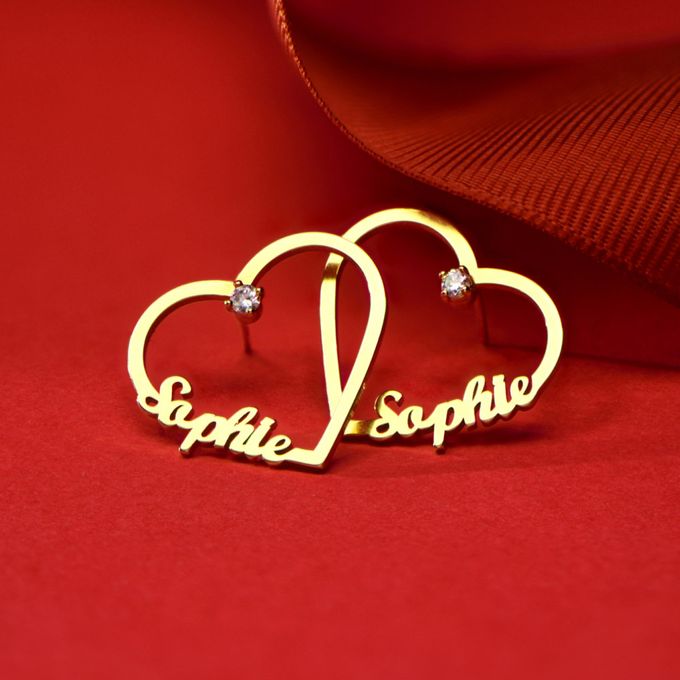
How to Measure Gauge Without Special Tools
If you are unsure of your earring gauge, you can usually estimate it without professional tools.
One simple way is to compare an earring you already wear comfortably with standard gauge charts online. If the post slides in easily and feels familiar, it is likely 18 gauge or 20 gauge, which are the most common sizes for standard ear piercings. If the post feels noticeably thicker, it may be 16 gauge.
You can also compare the post to everyday items. A typical earring post is thinner than a standard paperclip wire. While this is not perfectly precise, it helps you rule out sizes that would feel uncomfortable.
Earring Size Guides by Type
Different earring styles rely on different measurements. Knowing which size matters most helps you choose with confidence.
Stud Earrings
For studs, focus on the width of the front piece. Smaller studs between 3 and 5 mm feel subtle and are easy to wear daily. Medium studs around 6 to 8 mm are more noticeable without feeling heavy. Larger studs create a statement and are best reserved for occasions when you want visual impact.
Post length can also matter if you have thicker earlobes or prefer extra security from the backing.
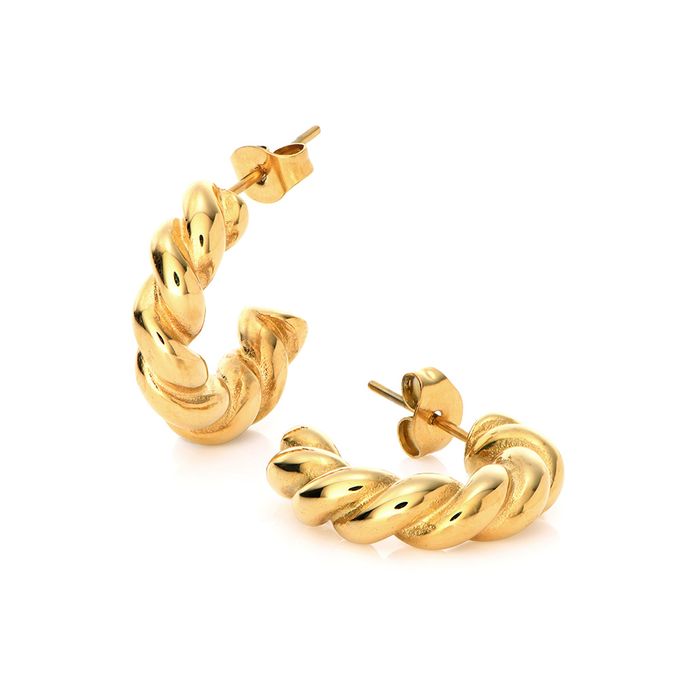
Hoop Earrings
Hoops are measured by inner diameter. This determines how the hoop sits around your ear.
Huggie hoops usually measure under 12 mm and sit very close to the earlobe. Medium hoops, ranging from 20 to 30 mm, create a classic look. Large hoops, often 40 mm or more, hang lower and feel more expressive.
Inner diameter matters more than outer size because it affects comfort and clearance around the ear.
Drop and Dangle Earrings
Drop and dangle earrings are all about total length. Short drops feel polished and easy to wear, while longer dangles create movement and drama.
Always measure from the top connection point to the lowest part of the earring. Even a small difference in length can change how an earring frames your face.
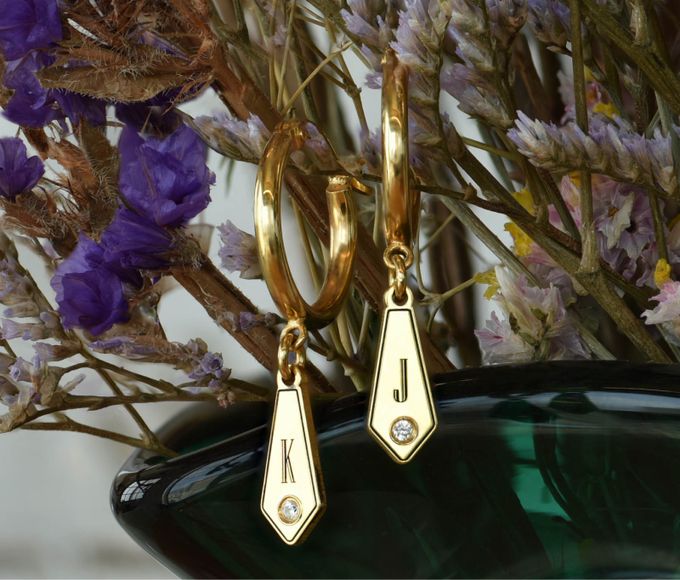
Huggies and Small Hoops
Huggies are designed to sit very close to the ear. Measuring inner diameter carefully is essential here. If the diameter is too small, the hoop may not close comfortably. If it is too large, it loses the snug look that defines the style.
Gauge and Stretched Earrings
For stretched piercings, gauge size becomes the primary measurement. Lower gauge numbers indicate thicker jewelry. Choosing the correct gauge ensures comfort and helps maintain the health of the piercing.
Earring Size and Face Shape
Earring size can subtly enhance your features.
Longer earrings tend to elongate the face and work well for round or softer face shapes. Medium-length earrings suit most face shapes and are easy to style. Very large or wide earrings draw attention outward and can balance sharper features.
If your ears are smaller, oversized earrings may feel heavier more quickly. If your ears are larger, slightly bigger designs can feel more proportional. Comfort should always guide your choice.
Common Mistakes to Avoid When Measuring Earrings
A few small mistakes often lead to disappointment when earrings arrive.
Measuring the outer diameter of hoops instead of the inner diameter is one of the most common errors. Forgetting to include charms or drops in the total length can also make earrings seem shorter than expected. Mixing millimeters and inches without converting properly is another frequent issue.
Taking a moment to double-check measurements helps you avoid these problems.
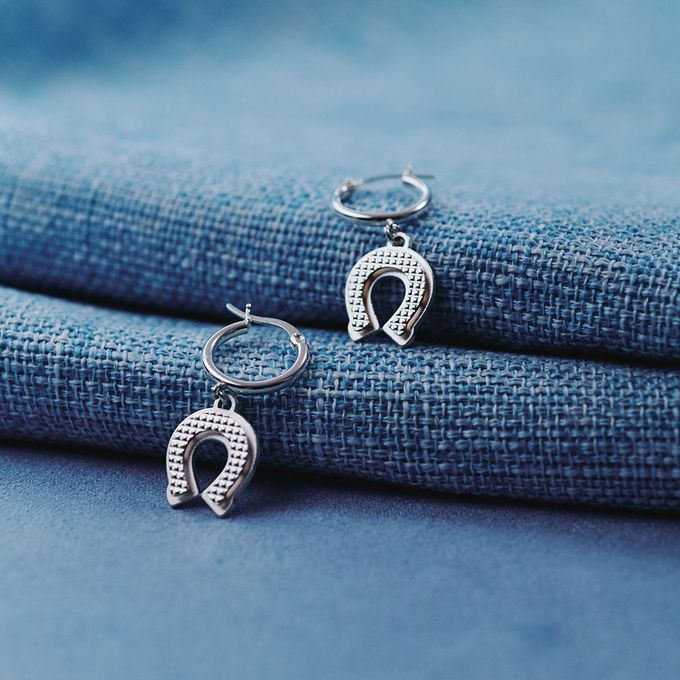
Earring Fit and Sizing at TheoGrace
TheoGrace earring designs include clear measurements, so you know exactly what to expect before ordering. Dimensions such as diameter, length, and post thickness are listed to help you compare styles and choose what feels right for you.
This approach makes it easier to select earrings that suit your comfort, your features, and how you plan to wear them, whether you are choosing everyday studs or a meaningful statement piece.
FAQs
How do I measure earring size at home?
You can measure earrings using a ruler, string, or paper strip. Measure the diameter of the studs and hoops, and the total length of the drops. Compare the posts to estimate the gauge.
What does gauge mean in earrings?
Gauge refers to the thickness of the earring post or wire. Lower numbers mean thicker posts. Most standard ear piercings use 18-gauge or 20-gauge.
How do I accurately measure the hoop diameter?
Measure straight across the inside of the hoop at its widest point. This inner diameter determines how the hoop fits around your ear.
Why is the inner diameter more important than the outer diameter?
Inner diameter affects comfort and fit. Outer diameter mainly affects appearance, while inner diameter determines how the hoop sits on the ear.
Should I measure post length too?
Post length can matter if you have thicker earlobes or prefer extra security. Measuring it helps ensure the backing fits comfortably.
More Earrings to Love